
A practical guide to protecting your family’s assets
Aliving trust is one of the most powerful tools in modern estate planning — yet it remains widely misunderstood. Unlike a will, which only takes effect after death and must pass through the courts, a living trust is a legal arrangement that goes to work immediately, allowing you to manage, protect, and distribute your assets on your own terms, both during your lifetime and after. For New York families concerned about the cost and delay of probate, the living trust has become an increasingly essential piece of a sound estate plan.

Living Trust vs. Will: The Key Difference
A will instructs how your assets should be distributed after you die — but a court must first validate it through the probate process, which in New York can take anywhere from several months to years. A living trust, by contrast, holds title to your assets in a separate legal entity you control as the grantor. Because the trust — not you personally — owns those assets, they pass directly to your beneficiaries without court involvement. The result: faster distribution, lower costs, and complete privacy.
"New York's probate process can be lengthy and expensive. A properly funded living trust eliminates that burden entirely for your loved ones."
Setting Up Your Living Trust in New York
The process begins with drafting a trust document — a comprehensive legal agreement that names you as the initial trustee (so you retain full control during your lifetime), designates a successor trustee to manage affairs if you become incapacitated or pass away, and outlines precisely how your assets should be distributed. New York does not require a living trust to be filed with any state agency, but it must be signed, dated, and notarized to be legally valid.
Working with an experienced estate planning attorney is strongly advisable. New York’s estate tax exemption — currently among the most complex in the country — means that improperly structured trusts can inadvertently expose estates to significant state taxes. An attorney ensures the document meets all legal requirements and is tailored to your family’s circumstances.
The Trust Funding Process: The Step Most People Miss
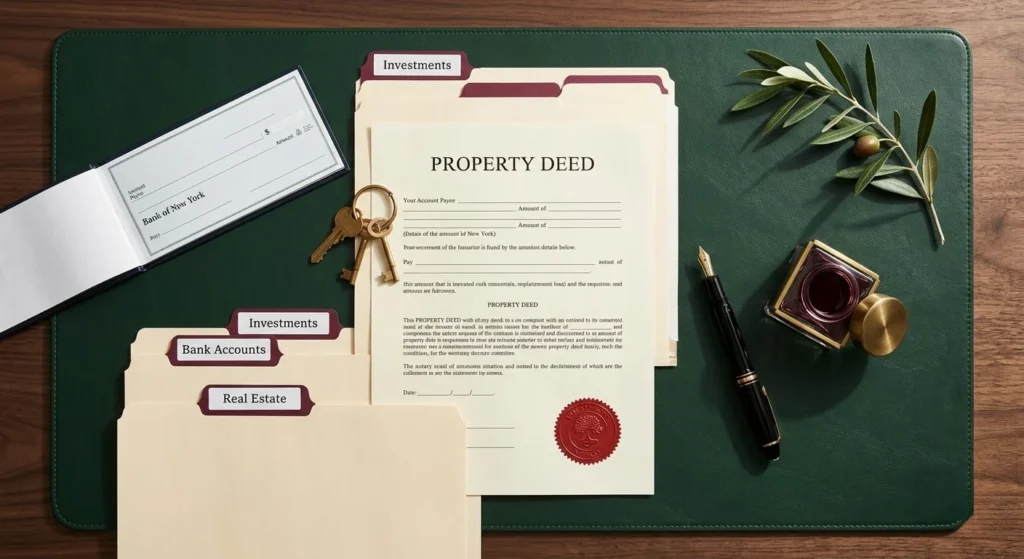
Creating the document is only half the job. A living trust only protects what’s actually inside it. Funding means retitling your assets — real estate deeds, bank accounts, investment portfolios, and other property — out of your personal name and into the name of the trust. For New York real estate, this involves recording a new deed with the appropriate county clerk. For financial accounts, your bank or brokerage handles the retitling paperwork. Assets left outside the trust — even accidentally — may still be subject to probate.
The Successor Trustee: Your Chosen Guardian
Your successor trustee is the person or institution that steps in to manage or distribute trust assets when you no longer can. This individual carries serious responsibilities: paying debts, filing final tax returns, and distributing assets to beneficiaries exactly as the trust instructs. Choose someone organized, trustworthy, and ideally familiar with financial matters. Many families name a trusted adult child or a professional corporate trustee for larger or more complex estates.
Living Trusts for Families with Children
For families with young children or dependents, a living trust provides an additional layer of protection that a will simply cannot match. You can specify exactly when and how assets are released to minors — for example, directing that funds be used for education until age 25, then distributed in stages. This prevents a court-appointed guardian from controlling your child’s inheritance, and it eliminates the family disputes that so often follow the shock of sudden loss.
Benefits at a Glance
Beyond probate avoidance, a living trust offers meaningful flexibility. You can amend or revoke it at any time while you’re alive. It protects your privacy — unlike a will, a trust never becomes a public record. It provides seamless management of your assets during incapacity, so your family isn’t forced into a costly guardianship proceeding. And it can be structured to minimize New York and federal estate taxes for larger estates, preserving more of your legacy for the people who matter most.

Keep Your Trust Document Current
A living trust is a living document. Major life events — marriage, divorce, the birth of a child, acquiring significant property, changes in state law — may all require updates. Reviewing your trust with your attorney every three to five years, or after any major change, ensures it continues to reflect your actual wishes and remains legally effective.
Estate planning is one of the most meaningful gifts you can give your family. A properly drafted and funded living trust removes uncertainty, reduces cost, and ensures that the people you love receive what you’ve built — quickly, privately, and exactly as you intended.
Ready to Protect Your Family’s Future?
Speak with an experienced New York estate planning attorney to set up a living trust tailored to your needs. Don’t leave your legacy to chance — or to the courts.