

A grandmother in Forest Hills called me last spring. Lovely woman, sharp as anything. She had been quietly tucking money away for her two grandkids for years. A little here, a little there. Birthday checks she suspected were going straight to sneakers. Now she wanted to do it properly, and she had one question.
How do I leave this to them without it getting wasted, taxed, or handed over the day they turn eighteen?
Good questions. All three. And the answer, more often than not, is a trust.
Grandparents sit in a peculiar spot. You adore these kids. You’d give them the world. You also know, somewhere in the back of your mind, that handing a teenager a pile of cash rarely ends the way anyone hoped. A trust lets you be generous and still keep a steady hand on the how and the when. So let me walk you through it. How these trusts work here in New York, and how to set one up without snagging on the parts that snag most people.
Why grandparents reach for a trust
Start with the why, because it drives everything else.
You could simply name your grandchildren in your will. Lots of folks do. The trouble surfaces the moment a minor actually inherits. In New York, if a child under eighteen is set to receive more than ten thousand dollars outright, that money cannot just land in their lap. A court steps in. Someone has to be appointed guardian of the property through
Eighteen. Sit with that for a second. Most eighteen year olds I know are still figuring out laundry, let alone a five figure check.
A trust sidesteps all of it. You write the rules. You choose someone capable to hold the reins. And nothing gets dumped on a kid who isn’t ready. That’s the whole appeal, and once grandparents hear it, they tend to lean in.
The trust structures that work best for grandchildren
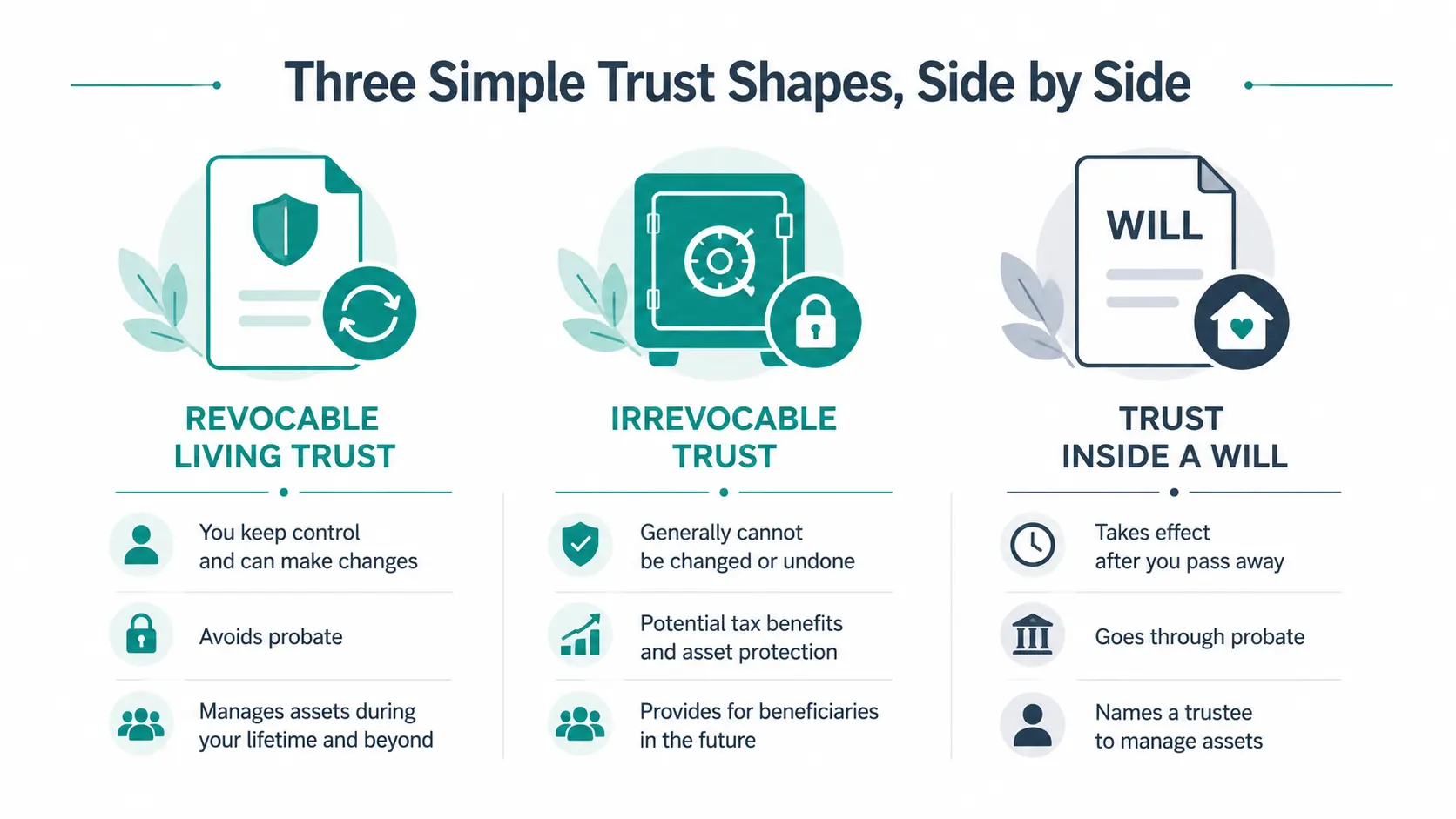
There isn’t one right answer. There’s the right answer for your family. Here are the shapes these usually take.
A revocable living trust with a share carved out for each grandchild. You stay in control while you’re alive, you can change your mind, and at your passing each grandchild’s share is held and managed on terms you set. Clean and flexible. Many grandparents fold this right into the same plan they already use, the kind I cover in our guide on
An irrevocable trust, sometimes built to last across generations. You give up some control, yes. In exchange you get stronger protection from creditors and divorces, plus real tax advantages for larger gifts. This is the tool when the numbers get big or you want the money to skip down a generation cleanly.
A trust written inside your will, called a testamentary trust. It only springs to life when you pass. Simpler to set up, though it does pass through Surrogate’s Court first, so it lacks the privacy and the smoothness of a living trust.
Not sure which fits? That’s normal. The structure should follow your goal, not the other way around. A grandmother saving for college has different needs than one shielding a family business, and the document should reflect that.
Leaving property versus leaving cash
What you put in the trust matters as much as the trust itself.
Cash and investment accounts are the easy case. They drop in, they grow, the trustee manages them, and distributions flow out on your schedule. Straightforward.
Real estate is where people pause. Say you’ve got the family house in Bay Ridge, or a little place upstate near the lake. You can absolutely leave property to grandchildren through a trust, and it spares them the probate headache. But think it through. Will three grandkids really co own a cabin and agree on everything? Sometimes the kinder move is to let the trustee sell it and split the proceeds. A business interest deserves the same hard look. And then there’s education. A lot of grandparents are really saving for college without quite naming it. A
Funding it the gift tax smart way
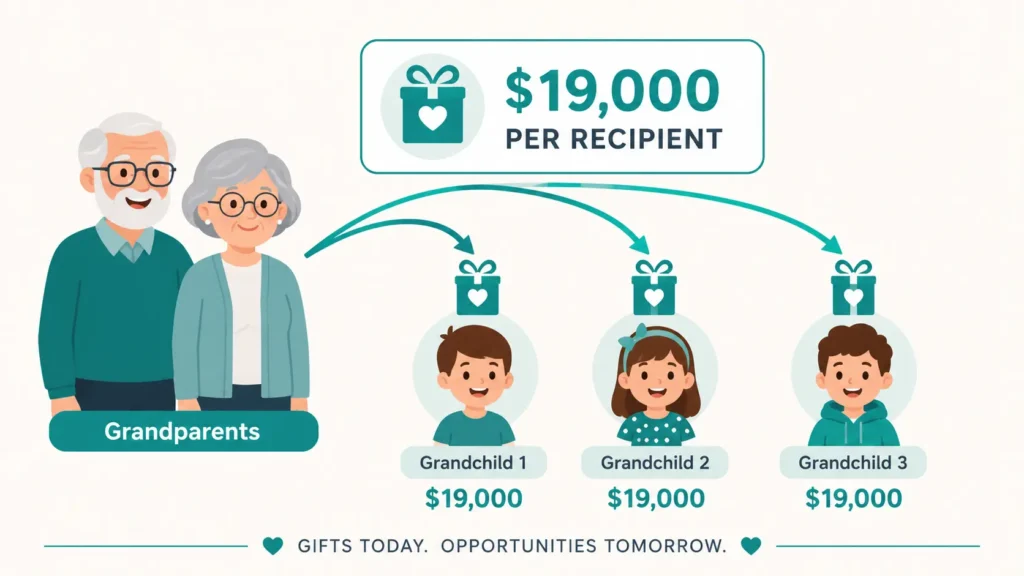
Here’s the part that makes grandparents grin once they get it. You can move a surprising amount to grandchildren with zero gift tax, year after year, as long as you stay inside the lines.
For 2026, the want to supercharge a 529? There’s a special rule that lets you front load five years of gifts at once, up to ninety five thousand dollars per grandchild, or a hundred and ninety thousand from a couple. One lump, no gift tax, as long as you ride out the five years.
For the truly large estates, there’s another layer. The federal estate and lifetime gift exemption sits at fifteen million dollars per person in 2026, and a separate generation skipping transfer tax, taxed at forty percent above that exemption, applies when wealth jumps straight to grandchildren.
Most families never come anywhere near these numbers. But if you might, this is exactly the conversation to have early, because the planning rewards people who start sooner. One quick note while we’re on taxes. New York has its own estate tax, separate from the federal one, and it kicks in well below that federal figure. It is an estate tax, not an inheritance tax, and the threshold shifts a little each year, so it’s worth a check.
Naming a trustee you can actually count on
This is the choice people agonize over, and they should. The trustee runs the show. They hold the money, follow your instructions, decide on the gray areas, and look your grandchild in the eye when the answer is not yet.
Plenty of grandparents name an adult child, the parent of the grandkids. That can work well. The person already loves the child and knows them. Just be honest about the family dynamics. Is your son organized with money? Will naming one daughter over another start a quiet feud at Thanksgiving? These things matter more than people admit.
Sometimes the better call is a professional trustee, a bank or trust company, especially for larger sums or trusts meant to run for decades. They charge a fee. They also never play favorites, never lose the paperwork, and never retire from the job by accident. And always, always name a backup. Trustees move, age, and step down. A trust without a successor named is a trust waiting on a court to fix it.
Setting it up here in New York
So how does it actually happen? Less dramatic than you’d think.
You meet with an estate planning attorney and talk through your goal, your family, and the money. From there we settle on the right structure and draft the document, spelling out who manages it, who benefits, and exactly when and how the money comes out. Then you sign it the way New York law requires, with the proper formalities, because a trust signed wrong is a trust that may not hold. Last comes the step everyone forgets. Funding. A trust only controls what’s actually inside it, so we retitle the accounts and assets into the trust’s name. Skip that, and you’ve built a beautiful empty box.
Frequently Asked Questions
The bottom line
A trust fund for your grandchildren isn’t a rich person’s toy. It’s a grandparent saying, plainly, I want this to land well. Not blow up at eighteen, not get split in someone’s divorce, not vanish in a year of bad decisions.
You pick the structure. You pick the trustee. You set the pace. And you get to watch some of it happen while you’re still here to enjoy it. That last part is the gift inside the gift.